Recap the Homework for Thursday:
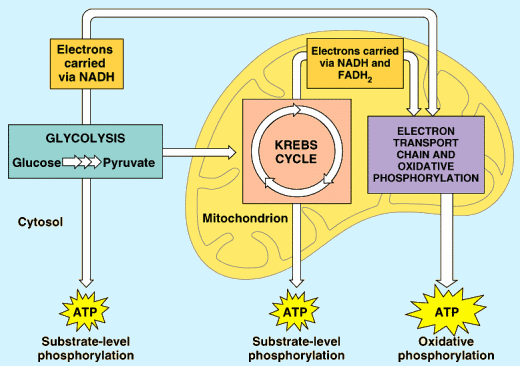
Read Ch. 9.2, answer study guide questions. Review the diagram (overview of cellular respiration) from 9.1 which we went over in class and draw it again and again until you can draw it from from memory.
For our photosynthesis video: write the paragraph you were assigned in class. Remember to write in first person, telling who you are, your function (what you do) and your value (why you are important). Think of a clever way to tell this, perhaps using an accent or funny voice and exaggerated facial expressions. Be creative.
(Anna, call me for your assignment.)
Lastly, in preparation for Thursday morning, when we will have a person from the LiMPETS program coming to give the orientation for our field trip to Duxbury Reef on the 17th (Friday), check out their website: http://limpetsmonitoring.org/what.php
Also watch: Stand Up and Count 5 minutes.
Monday, February 6, 2012
Friday, February 3, 2012
homework
Tuesday, January 31, 2012
Khan to the Rescue
Ok, so we are making progress on understanding a very, very (comparatively) complex reaction, one that is so very basic and so essential that we started learning about it in kindergarten; that is, the process of photosynthesis, without which no life, as we know it, could exist. As Einstein said, "We should make things as simple as possible, but no simpler." And so here we are, using our very valuable time, and wondering, "Why do I have to do this?"
The answer is many-fold: first, it expands our brain-power, and teaches us how to learn the hard stuff. Also, it develops our character, building in us qualities of perseverance and thoroughness and much more. Lastly, and most important, it glorifies God and reveals His majesty and greatness and perhaps causes our hearts to soar in worship. No, I'm not kidding; I really do feel that way. It's not just pretty sunsets that do this.
Not trying to over-spiritualize. Just sayin'.
Now the homework: first, keep working on the video project. I am flexible on how much time it will take, so if we don't finish shooting on Thursday, we have some leeway. (Have you thought about what you wanted to wear? Perhaps black t-shirts???)
But here is the study part: Watch these videos (there are four segments, a total of 70 minutes, so not all at once, please.) From Khan Academy, let me welcome:
The answer is many-fold: first, it expands our brain-power, and teaches us how to learn the hard stuff. Also, it develops our character, building in us qualities of perseverance and thoroughness and much more. Lastly, and most important, it glorifies God and reveals His majesty and greatness and perhaps causes our hearts to soar in worship. No, I'm not kidding; I really do feel that way. It's not just pretty sunsets that do this.
Not trying to over-spiritualize. Just sayin'.
Now the homework: first, keep working on the video project. I am flexible on how much time it will take, so if we don't finish shooting on Thursday, we have some leeway. (Have you thought about what you wanted to wear? Perhaps black t-shirts???)
But here is the study part: Watch these videos (there are four segments, a total of 70 minutes, so not all at once, please.) From Khan Academy, let me welcome:
Thursday, January 26, 2012
Hope You Enjoyed the Confusion!
Well, that might be asking a bit much...at least you may enjoy a lighter load of homework. But don't get too laid back; our goal is to figure out how to learn the tough stuff, particularly by modeling and making analogies.
So...poke around on the internet to find how other students have explained the Light-dependent reactions and the Calvin cycle, and make notes for your groups. Brainstorm ideas for what you could use as props to carry out the plan.
WHEN YOU FIND A GOOD VIDEO, POST THE LINK AS A COMMENT. thanks.
Monday, January 23, 2012
Photo-Finish
Let's make this simple :
Read all of 8.3 and answer end of chapter questions 7-10, 18-23 and 26-28 (page 217). Copy all of the diagrams over again. [figure 8-7 on page 209, figure 8-10 on page 211, and figure 8-11 on page 212]
THIS IS THE HOMEWORK YOU TURN IN ON THURSDAY.
Oh, and what is ATP synthase? Here is a cool video:Evidence of a Designer: The ATP Synthase Enzyme It's so cool, and so short, you should watch it twice! Draw a picture of ATP synthase in your lab book, and tell what it does for the cell. Why is it "an evolutionary impossibility?"
more vids. Photosynthesis: Light Reactions
(if only you could play this in fast forward: this explanation gives you no idea of how fast this is going: up to 7,000 rotations per minute on the ATP synthase!)
The Calvin Cycle not great, but not long either. If you find a better one, post a comment. Can you think of a SIMPLE way to model the Calvin Cycle? Please share on Thursday.
Read all of 8.3 and answer end of chapter questions 7-10, 18-23 and 26-28 (page 217). Copy all of the diagrams over again. [figure 8-7 on page 209, figure 8-10 on page 211, and figure 8-11 on page 212]
THIS IS THE HOMEWORK YOU TURN IN ON THURSDAY.
Oh, and what is ATP synthase? Here is a cool video:Evidence of a Designer: The ATP Synthase Enzyme It's so cool, and so short, you should watch it twice! Draw a picture of ATP synthase in your lab book, and tell what it does for the cell. Why is it "an evolutionary impossibility?"
more vids. Photosynthesis: Light Reactions
(if only you could play this in fast forward: this explanation gives you no idea of how fast this is going: up to 7,000 rotations per minute on the ATP synthase!)
The Calvin Cycle not great, but not long either. If you find a better one, post a comment. Can you think of a SIMPLE way to model the Calvin Cycle? Please share on Thursday.
Thursday, January 19, 2012
pHoToSyNtHeSiS
read textbook 8.2 - Photosynthesis and do study guide, and also the first page of 8.3, which shows the diagrams of the chloroplast.
Watch brainpop, 3 movies: photosynthesis, cellular respiration and metabolism. Read FYI or do quizzes.
Also: http://www.brightstorm.com/science/biology/cell-functions-and-processes/photosynthesis/
Draw a diagram of a chloroplast and label. (in your lab notebooks.) List what each part is or does. Is this a cool t-shirt or what? (what.)
That seems like enough.
There is nothing funny about a chloroplast. :( But Madison has found us a goodie: https://www.youtube.com/watch?feature=player_embedded&v=GOMIBdM6N7Q#!
Monday, January 16, 2012
The Subject is ATP -- Amazing Tremendous POWER!
Otherwise known as adenosine triphosphate. Here's the homework:
First of all, warm up with the video we keep not having time for: From Harvard University,
(watch the 3-minute music version.) WOW!
Read text chapter 8.1: Energy & Life with study guide. Keep track of all the analogies mentioned. ATP is like a ....what? Post a comment.
Videos: http://www.brightstorm.com/science/biology/cell-functions-and-processes/cellular-energy-production/
http://www.khanacademy.org/video/atp--adenosine-triphosphate?playlist=Biology {this video is advanced and contains hazardous amounts of chemistry} OR if you would prefer, you may instead spend the time in review on brainpop.com and watch these five short movie clips: /http://www.brainpop.com/science/cellularlifeandgenetics
log in (remember we wrote down the username/password in class) and follow the links to review. cells, cell structures, passive transport, active transport. Read the FYI's, which are generally interesting and informative.
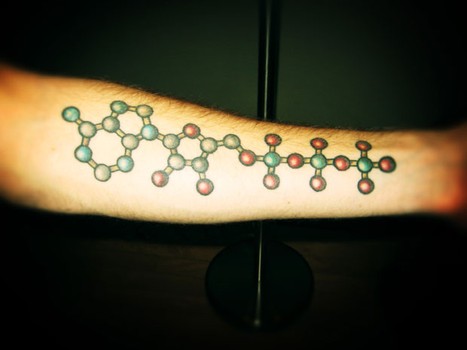
Lastly, make a model of the ATP molecule; it can be 2- or 3- dimensional, but not just a sketch. At least cut up some paper and make it look cool.
ATP - Power To Drive Cellular Work
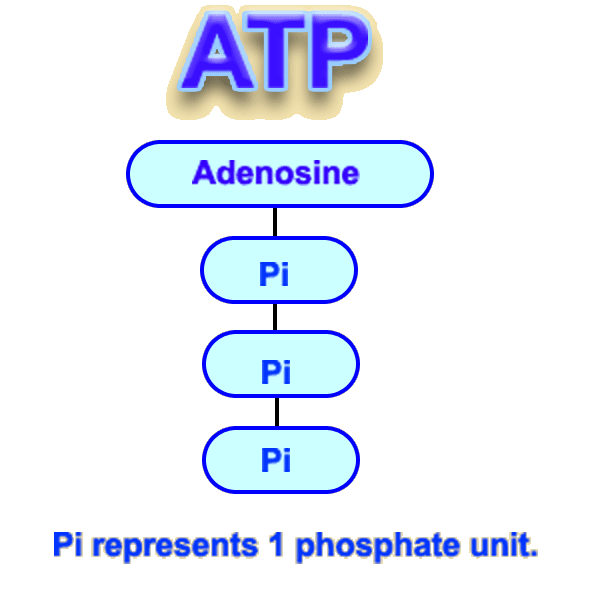
ATP - Adenosine triphosphate - a close relative to Adenine, a nucleotide found in DNA.- Contains three phosphate groups connected to each other in sequence
- The bonds an be broken by hydrolysis
- When the terminal phosphate bond is broken, a molecule of inorganic phosphate (Pi) is formed
- This forms adenosine diphosphate, ADP + (Pi)
- This generates free energy, which can be used by the cell to do work
- Obviously, for the cell to function, ATP must rapidly be regenerated.
- One muscle cell can consume and regenerate over 10,000,000 ATP's a second
- If ATP couldn't be regenerated, humans would have to consume nearly their body weight in ATP each day
Subscribe to:
Posts (Atom)